
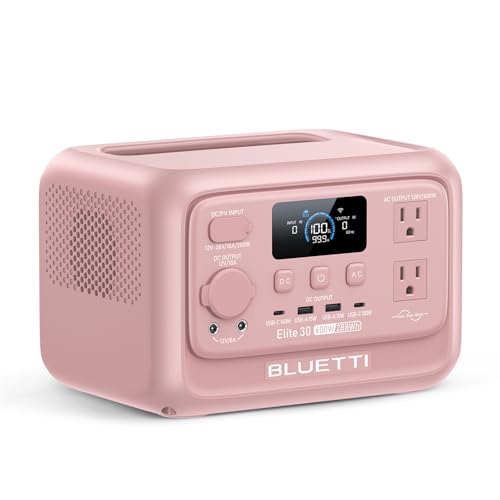
What to know about BLUETTI Elite 30 V2 Portable Power Station 288Wh 600W LFP Solar Generator | AC Outlet (Power Lifting 1500W), Fast Recharge LiFePO4 Battery Backup, UPS Backup Power for Camping, Road Trip, Outage
This editorial focuses on the BLUETTI Elite 30 V2 as presented in the supplied catalog snapshot. The product title in the snapshot lists capacity and power figures, a LiFePO4/LFP battery reference, and use-case labels such as camping and outage. Because the source is a saved listing snapshot and parsed specifications are empty, this guide explains what the listing indicates, how those indications affect purchase decisions, and which specific technical details to verify before buying.
What the listing actually states
The saved catalog snapshot identifies the product as the BLUETTI Elite 30 V2. The product title included in that snapshot shows a numeric capacity and output (288Wh and 600W) and also mentions “Power Lifting 1500W.” The title uses LFP and LiFePO4 terminology and lists features such as AC outlet, fast recharge, UPS backup, and solar generator positioning. Treat these as claims from the listing text—not independently tested facts—and use them as a starting point for verification rather than final confirmation of capabilities.
Decision criteria to prioritize
With only the snapshot information available, prioritize verification of a few core items before deciding. Confirm the battery capacity and whether the 288Wh figure in the title is the usable energy, full-cell capacity, or a nominal rating. Verify whether 600W is the continuous AC output and whether the “Power Lifting 1500W” refers to a short-duration surge or another metric. Check the stated LiFePO4/LFP chemistry details if long cycle life is important to you. Finally, ensure the claimed UPS and fast-recharge behaviors meet your needs by checking documented transfer times and charging specs.
Compatibility and real-world device matching
The snapshot calls this a portable power station with an AC outlet and labels it for camping and outages, which implies use with consumer electronics and small appliances. Because the snapshot lacks port-level details, buyers should verify the exact AC output type (pure sine vs modified), the number and type of AC outlets, and the DC/USB outputs needed for phones, laptops, or other gear. Also confirm whether the 600W (and any listed 1500W peak) aligns with the continuous power needs of specific devices you expect to run, and whether the unit supports simultaneous outputs without derating.
Charging, solar and UPS considerations
The listing snapshot uses terms like “fast recharge,” “Solar Generator,” and “UPS Backup Power.” Those are functional claims that need specification: confirm the maximum input for solar charging, the supported panel voltages or connector types, and any MPPT or charge-controller details. For UPS use, confirm transfer time, supported load profile during transfer, and whether there are conditions that inhibit UPS operation (for example, charging mode or battery state). Without parsed specs in the snapshot, these charging and UPS performance details remain items to verify with the manufacturer or a current product datasheet.
Trade-offs and limits you should consider
Assuming the listing’s numeric values reflect intended ratings, expect trade-offs common to compact power stations: a finite energy pool for continuous use, a maximum continuous power limit, and a short-term peak capacity. The snapshot’s ‘‘Power Lifting 1500W’’ text suggests an advertised peak capability, which typically differs from sustained output. Also note that claims like “fast recharge” are relative and depend on supplied charging hardware and input power. Because the snapshot lacks supporting technical detail, treat performance-related claims as unverifiable until you can confirm charger specs, input limits, and duty-cycle guidance from up-to-date documentation.
Practical durability, mobility and purchase logistics
The title positions this unit as portable and targeted at outdoor and emergency scenarios, but the snapshot contains no confirmed weight, dimensions, or environmental ratings. Those physical details affect how portable the unit will be in camping contexts and how easy it is to store for home backup. Confirm physical size, carrying options, ingress protection or temperature operating ranges, and the most recent seller or manufacturer documentation. Also note the snapshot’s source label indicates it is not current; verify availability, current specs, and terms from up-to-date listings or the manufacturer before purchase.
Who should consider it?
Based on the listing snapshot, this BLUETTI Elite 30 V2 is best for buyers who want a compact portable power station positioned for short-term outdoor use and emergency backup. The product title frames it around camping, road trips and outages and lists capacity and power figures suitable for running small devices. Prospective buyers seeking heavier-duty or long-duration backup should confirm continuous output and energy capacity before relying on it as a primary backup source.
Before you buy
Because parsed specifications are absent from the snapshot, verify the following before you buy: confirm that the listed 288Wh is the usable capacity, whether 600W denotes continuous AC output, and what “Power Lifting 1500W” actually covers (surge duration and conditions). Check detailed port counts and types, solar input specs, UPS transfer time, physical weight and dimensions, certifications, and current seller information (ASIN B0FMHJG8P2 can help locate the snapshot’s listing). The snapshot is not current—always confirm final specs with the latest manufacturer documentation.
Reasons to consider
- Title explicitly lists numeric capacity (288Wh) and continuous output figure (600W), giving a starting point for matching to device needs.
- The listing title references a higher short-term surge claim (“Power Lifting 1500W”), which indicates the vendor specifies both continuous and peak behaviors in the listing.
- The snapshot mentions LFP / LiFePO4 chemistry in the title, which—if confirmed in specs—typically refers to a particular cell chemistry often highlighted for cycle-life.
- The product is positioned for multiple use cases (camping, road trip, outage) and is categorized under Home Backup Power and Portable Power Stations in the snapshot, which helps narrow intended uses.
Limitations and unknowns
- Unknown: The snapshot does not include a verified port list or the number and types of AC/DC/USB outputs—confirm exact ports before purchase.
- Unknown: Charging input specs and solar-panel compatibility are not parsed in the snapshot—verify solar input voltage/current and recommended panel configurations.
- Unknown: Weight, dimensions and environmental ratings are not provided in the snapshot and are necessary to assess true portability.
- Snapshot not current: the source is a saved catalog listing snapshot labeled not current, so availability, specs and terms may have changed since this snapshot was taken.
Our bottom line
The saved catalog snapshot identifies the BLUETTI Elite 30 V2 and lists headline figures and features that make it worth considering for lightweight portable and short-duration backup use. However, the snapshot lacks parsed technical detail. Treat numerical values and feature labels from the title as claims to verify: confirm continuous and peak output definitions, usable energy, port selections, solar and UPS details, and physical specifications in current manufacturer documentation before committing to a purchase.
Common questions
Does this product use LiFePO4 battery chemistry?
The product title in the snapshot includes LFP and LiFePO4 terminology. That indicates the listing claims that chemistry, but you should confirm in the manufacturer’s current specifications or datasheet whether the unit’s cells are LiFePO4 and whether any chemistry-related cycle-life or safety claims are supported.
What do the numbers 288Wh, 600W and 1500W mean for everyday use?
Those numbers appear in the snapshot title: 288Wh, 600W and a ‘‘Power Lifting 1500W’’ note. Treat them as listing-stated figures. Confirm whether 288Wh is usable energy, whether 600W is continuous AC output, and whether 1500W is a short-duration surge rating. The manufacturer’s spec sheet should define these terms and any runtime expectations.
Can this unit be used as a UPS for a home router or desktop?
The snapshot title calls out ‘UPS Backup Power,’ which suggests the listing claims UPS functionality. To determine suitability, verify documented UPS transfer time, supported load profiles during transfer, and any limitations (for example, whether UPS works for all ports or only AC outlets). Don’t rely on the title alone—confirm current technical details before depending on it for critical UPS tasks.
Is the product compatible with solar panels?
The snapshot describes the product as a ‘Solar Generator.’ That implies solar compatibility, but the snapshot lacks solar input specs. Verify supported panel voltages, connector types, maximum solar input power, and whether an internal MPPT controller is present by consulting the manufacturer’s up-to-date documentation.
Editorial guidance is based on the product information available to SmallEnterpriseD. Confirm specifications, compatibility, price and availability with the retailer before purchasing.


