
Choosing the right power station capacity begins with understanding what you plan to run, for how long, and how youll recharge the unit. "Capacity" is usually expressed in watt-hours (Wh) and indicates stored energy; rated output in watts (W) and peak (surge) watts indicate what the unit can deliver at a moment. The market ranges from small travel-oriented banks to multi-kilowatt-hour systems intended for whole-house backup and expansion. This guide explains a practical method to estimate required capacity, how to handle peak loads, which recharge characteristics matter, and what product features to verify before buying. Examples reference manufacturer-stated product names from the supplied product set as illustrations of different classes of units rather than as endorsements or test results.
Key takeaways
- Build a device-by-device load list in watts and hours, sum watt-hours, and add a safety margin for conversion losses and unexpected demand.
- Match a station's continuous output and peak/surge capability to the highest-demand appliance you expect to run; capacity in watt‑hours determines runtime.
- Recharge options and recharge speed (AC, solar, vehicle/alternator, generator) determine how usable a pack is for repeated outings or extended outages.
- Battery chemistry and expandability affect long-term value; many higher-capacity consumer products use lithium iron phosphate (LFP) and may offer modular expansion.
Step 1 Create a realistic load list and convert to watt-hours
Start by listing every device you expect to power, the wattage each device draws (W), and how many hours you expect to use it during the period you need to cover. If a device lists amperage and voltage instead of watts, multiply amps volts to get watts.
Convert each device's use to energy by multiplying watts by hours to get watt-hours (Wh). Add the Wh values for all devices to determine the total energy requirement for your planned time period.
After you total the baseline Wh, add a safety margin to account for round-trip conversion losses (inverter inefficiency, DCDC losses) and any system overhead. Where possible, check the manufacturers documentation for inverter efficiency, whether quoted capacity is usable Wh or nominal cell capacity, and any recommended derating guidance to set an appropriate margin.
Step 2 Understand continuous vs peak (surge) watts and why both matter
Watt-hours tell you how long a device can run; watts tell you whether you can run it at all. Motors and compressors (refrigerators, air conditioners, pumps, some power tools) commonly require a short startup surge that can be several times their steady running demand. That surge can trip or damage an inverter rated only for the steady running wattage.
Always check both continuous and peak (surge) output ratings in manufacturer specifications. The continuous rating must cover the steady running load of your largest device, and the peak rating must cover startup spikes. Use both numbers together when evaluating compatibility with motor-starting equipment.
Step 3 Pick capacity by use case: travel, camping, or home backup
Travel and laptop-focused banks are designed for device charging on the go and prioritize compact size and airline compliance. They are suitable for phones, laptops, and small electronics but not for larger appliances.
Camping and multi-day outdoor use is typically served by mid-size stations that can run refrigeration, lighting, and device charging for groups. Product examples in the supplied set include compact stations and larger portable units aimed at extended outdoor use with higher continuous outputs.
Home backup and whole-house scaled solutions live in the multi-kilowatt-hour class, intended for prolonged outages or to run major appliances. Some products in the supplied set are described as expandable with add-on batteries or modules to increase stored energy for longer durations or simultaneous heavy loads. Treat these manufacturer statements as product design descriptions; verify real-world applicability to your load and installation before relying on them.
Step 4 Recharge options and how they change usable capacity
Recharge speed and available input methods substantially affect how useful a given capacity is. A large pack with slow recharge may be fine for single-use events, but for multi-day trips or extended outages youll want faster recharge or the ability to top up via solar or vehicle charging.
Manufacturers in the supplied product set describe a variety of recharge approaches and capabilities across AC, solar, vehicle/alternator, and generator inputs. Verify the stations stated maximum input type and wattage for each method, whether the unit supports combined inputs, and whether MPPT or specific adapters are required for solar or vehicle charging. Also confirm whether the unit supports pass-through charging if you intend to power devices while charging the station.
Step 5 Battery chemistry, cycle life, expandability, and practical trade-offs
Battery chemistry affects cycle life, thermal stability, and longevity. Several higher-capacity units in the supplied product set use lithium iron phosphate (LiFePO4 / LFP), which manufacturers commonly promote for longer cycle life and greater thermal stability. Treat manufacturer statements about cycles and service life as claims to verify against warranty terms and documentation.
Expandability is important if your energy needs may grow. Some product descriptions in the supplied set reference expansion options or pairing multiple units to increase total stored energy. If modular growth matters to you, verify the expansion path, required connectors, compatibility, and cost of additional modules before purchasing.
Consider practical trade-offs such as the portability of the unit relative to its capacity, the number and type of output ports you need, and the warranty. Higher-capacity, expandable systems typically weigh more and are intended for semi-stationary use; smaller units are easier to transport but provide less runtime for heavy loads.
What to check before choosing
- Make a device-by-device load list (watts hours) and total the watt-hours you need; verify whether product capacities are quoted as usable Wh or nominal cell capacity.
- Confirm continuous output (W) and peak/surge W of the power station relative to the highest-startup appliance you plan to run (fridge, A/C, pumps, power tools).
- Check recharge options (AC, solar PV input, vehicle/alternator, generator) and stated recharge behavior; ensure required adapters (MPPT controllers, vehicle adapters) are available or included.
- Verify battery chemistry, rated cycle life, warranty terms, and whether capacity is expandable or modular if you expect to scale later.
- Consider weight and size against how portable you need the unit to be; several listed models note substantial weight and are designed primarily for vehicular or stationary use rather than frequent hand-carrying.
- Confirm the exact outlet complement and port power (USB-C PD wattage, number of AC outlets) for the devices you plan to run simultaneously.
Final considerations
Choosing the right power station capacity is an exercise in matching stored energy (Wh) to the duration you need and matching power (W) to instantaneous demand. Start with a clear device load list and convert it into watt-hours, then add margins for inefficiencies and peak-startup demands. Use manufacturer-stated specifications for capacity, continuous output, and peak output to evaluate whether a candidate unit can safely run your largest appliance and provide the runtime you need. Recharge speed and available inputs change the practical usefulness of any capacity: faster AC or vehicle charging and the ability to top up with solar make mid-size packs much more usable over multiple days. Finally, consider chemistry, cycle life, expandability, weight, and warranty before deciding, and verify connector types and compatibility with the manufacturer for your intended setup.
Frequently asked questions
How do I convert my devices power needs into the Wh capacity I should buy?
List each devices power draw in watts and how many hours youll run it, then multiply watts by hours to get watt-hours (Wh) for each device and add them up for your total energy need. Confirm whether the manufacturers quoted capacity is usable Wh and factor in conversion losses (inverter and DCDC inefficiencies). If usable Wh or derating guidance is not published, ask the manufacturer for inverter efficiency and usable capacity so you can apply an appropriate safety margin.
Why do some power stations list a much higher peak wattage than their continuous output?
Peak (surge) wattage is the short-term power the inverter can deliver to handle motor or compressor startup. Continuous output is the maximum steady power the inverter can sustain. For motor-starting appliances, ensure the stations peak rating covers the startup spike and the continuous rating covers the running wattage.
Can I rely on the listed runtime claims manufacturers provide?
Manufacturer runtime claims are useful directional information but are often based on specific test conditions such as ambient temperature, duty cycle, and device efficiency. Use such claims as examples rather than guarantees, and verify the stated test conditions and whether the quoted capacity is usable Wh or nominal. When in doubt, treat runtime statements as manufacturer-provided examples that require confirmation for your conditions.
Is battery chemistry important when choosing capacity?
Yes. Battery chemistry affects cycle life, thermal stability, and expected longevity. Several products in the supplied set list LiFePO4 (LFP) chemistry, which manufacturers commonly highlight for longer cycle life and stability. Confirm manufacturer claims about cycles and service life against warranty terms and real usage expectations before relying on longevity claims.
How do recharge options (solar, alternator, AC) change how much capacity I need?
Recharge methods determine how quickly you can restore stored energy. If you can top up via fast AC charging, alternator, or high-wattage solar during your usage period, you may be able to manage with less storage because you can recharge between uses. Confirm the stations stated input limits and compatible sources, and verify whether combining inputs is supported and whether required adapters or MPPT controllers are included or sold separately.
Can I expand capacity later if my needs increase?
Some systems are designed to be modular or expandable. A few products in the supplied set describe expansion or pairing options to increase total stored energy. If you anticipate growing energy needs, verify the exact expansion path, compatibility, connector types, and costs of add-on modules before purchasing.
Explore relevant products
Review available source details and compare products that relate to this guide.
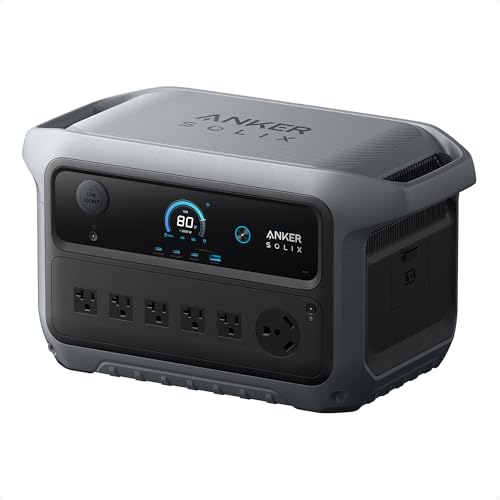
Anker SOLIX C2000 Gen 2 Portable Power Station, 2,048Wh, 2,400W, Ca...
View available specifications and buying considerations.
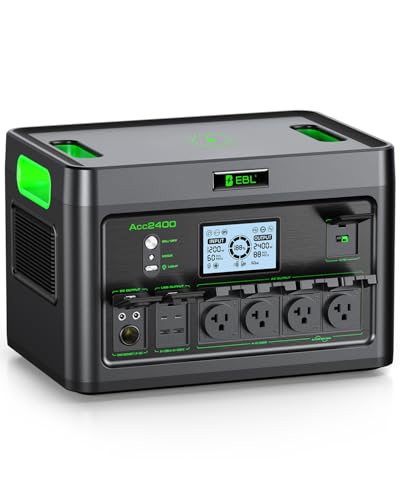
EBL 2400W Portable Power Station LiFePO4 Battery for Home Use | 184...
View available specifications and buying considerations.

Jackery Explorer 2000 v2 Portable Power Station, 2042Wh, 2200W AC O...
View available specifications and buying considerations.

EF ECOFLOW Portable Power Station 3600Wh DELTA Pro, 120V 3600W AC O...
View available specifications and buying considerations.

DJI Power 1000 V2 Portable Power Station, 1024Wh LFP Battery | 2600...
View available specifications and buying considerations.

Portable Power Bank with AC Outlet, 100W Portable Laptop Charger, 9...
View available specifications and buying considerations.
SmallEnterpriseD may earn a commission from qualifying purchases. This article is based on documented research and product data, not claimed hands-on testing.