
Estimating how long a portable power station will run your devices is a practical skill you can learn quickly. The process hinges on simple energy accounting: the station’s stored energy (expressed in watt-hours) versus the power your devices draw (in watts), adjusted for real‑world losses such as inverter conversion and device startup surges. This guide explains which product facts to gather from specifications, how to translate device labels into expected draw, and the conservative adjustments to make for inverter losses, duty cycles and environmental effects. Use the supplied product listings as context and always verify manufacturer details in the manual when available.
Key takeaways
- Begin with the product’s capacity in watt‑hours (Wh) and your appliance’s steady watts — runtime (hours) = capacity Wh ÷ appliance watts (theoretical).
- Check both the station’s continuous AC rating and any peak or power‑boost rating before connecting motors or compressors.
- Confirm usable capacity or the manufacturer’s recommended depth of discharge and check for idle/standby draw — these materially change usable hours.
- Treat the Wh ÷ W result as a starting point and reduce it for inverter/conversion losses, duty cycles, startup surges and environmental effects; when manufacturers don’t publish figures, plan conservatively.
1) Read the product facts you need: capacity, outputs and battery chemistry
The single most important specification for runtime calculations is capacity expressed in watt‑hours (Wh); treat the Wh number as the energy reservoir you will draw from. The example product listings in the dataset include capacity and output entries that you can use as starting data, but always confirm values from the product manual or the manufacturer.
Also note the unit’s output capabilities. The continuous AC output (rated watts) determines what the station can run steadily; a separate peak or power‑boost rating governs short startup surges. Some product listings explicitly show both kinds of numbers, and those figures should guide whether a given appliance can be started and run safely. Finally, battery chemistry (for example, LiFePO4 versus other lithium chemistries) matters because manufacturers may recommend different usable depth‑of‑discharge and cycle‑life strategies for different chemistries. Collect three things from the product documentation before estimating runtime: Wh capacity, continuous and peak output ratings, and any manufacturer guidance tied to battery chemistry.
2) Translate your devices’ labels into steady watts and identify surges
Many devices state watts directly. If they do not, you can get watts by multiplying volts by amps using the device label or power brick; consult the appliance manual or the manufacturer for those values when unclear. Avoid assuming nameplate values equal average operating draw — some labels show maximum or surge values rather than steady running watts.
Motorized appliances, refrigerators, pumps and some power tools frequently have startup or inrush surges that are higher than steady‑state draw. That surge matters two ways: the power station must be rated to handle the surge (compare the appliance surge to the station’s peak/power‑boost rating), and repeated surges can stress the inverter and reduce overall runtime. When planning to run motor‑driven devices, gather both steady‑run and startup surge figures from the appliance documentation and compare both to the station’s continuous and peak outputs before relying on a calculated runtime.
3) The core calculation and why it is only a starting point
The basic arithmetic is: theoretical runtime (hours) = capacity (Wh) ÷ device draw (W). This calculation gives a best‑case number that assumes you can use the full advertised Wh and that there are no conversion losses or parasitic draws. Use it to compare options and set expectations, but do not treat it as the definitive runtime you will see in the field.
Modern power stations and real appliances introduce losses and constraints that the simple formula ignores. Inverter conversion, internal standby draws, recommended depth‑of‑discharge limits and manufacturer‑reserved buffers for battery health all reduce usable runtime. When the documentation does not specify usable Wh or inverter efficiency, treat the simple Wh ÷ W result as a theoretical maximum and apply conservative adjustments or test under controlled conditions to refine your estimate.
4) Conversion losses, standby draws and app‑enabled features
When you run AC appliances from a battery‑based station, the inverter converts DC battery energy to AC and that conversion is not lossless. Some manufacturers publish inverter efficiency or idle power draw in technical specs or the user manual; where provided, use those published values to refine your math. If an app or energy‑saving mode is available, those features can reduce standby consumption and extend usable runtime if enabled.
If the manufacturer supplies an inverter efficiency or idle wattage, include those in your calculations by subtracting idle watts from total draw or scaling usable Wh by the published efficiency before dividing by device load. If no figures are supplied, plan conservatively and leave additional margin; also check whether certain DC ports can power devices more efficiently by avoiding the inverter when appropriate.
5) Duty cycles, simultaneous loads and environmental effects
Devices rarely draw a single fixed wattage equal to their label value. Heating elements cycle, refrigerators run intermittently, and other equipment has varying on/off patterns. To estimate runtime more accurately, think in terms of average draw over time: estimate the fraction of time a device is active and compute the weighted average wattage.
Add the average watts of each simultaneous device to form your total average load, and compare that load to the station’s continuous output rating. Environmental factors such as ambient temperature can lower usable battery capacity and increase internal resistance; colder conditions commonly reduce effective runtime. For extended outages or variable climates, include extra margin for temperature‑related capacity loss and for higher energy use if heating or defrosting is required.
6) Practical example calculations using supplied product listings
To practice the arithmetic, apply the Wh ÷ W formula using the capacities and outputs listed in the product entries from the dataset. These listings show how different Wh capacities and output ratings change the baseline theoretical runtime; larger Wh numbers imply longer theoretical runtimes, all else equal. Use those published specifications as a planning baseline only.
For multi‑device planning, add the average draws of each device to compute a combined load and then apply the Wh ÷ W step. If any device produces startup surges, confirm the station’s peak or boost rating can handle them. Finally, always reduce the theoretical result if documentation or the user manual cites inverter losses, idle draws, or a recommended usable state‑of‑charge; when that information is absent, plan conservatively or run a monitored test to verify real‑world performance.
What to check before choosing
- Record the station’s capacity in watt‑hours (Wh) and its continuous AC output rating; note any listed peak or power‑boost figures.
- Gather steady‑run wattage and startup surge (inrush) figures for each device you plan to run; consult the device manual or manufacturer when surge values are not listed.
- Confirm usable depth‑of‑discharge (DoD) or whether the manufacturer reserves a buffer; check battery chemistry (LFP vs other lithium types) for lifecycle and DoD guidance.
- Look for published inverter efficiency, idle/standby draw, and app‑controlled power‑saving modes in the manual; these alter usable runtime.
- Estimate duty cycles for cycling equipment (fridges, pumps) and add the average watts of simultaneous devices to get a realistic total load.
- Check operating temperature range and recharge options/charging speed in the manual if you plan to top up the station during an outage (wall, solar, car charging).
Final considerations
Estimating backup runtime is an exercise in energy accounting: combine the power station’s Wh capacity with realistic device wattage and conservatively account for conversion losses, surges and duty cycles. Use the simple Wh ÷ W formula to produce a theoretical maximum, then reduce that value according to verifiable manufacturer details such as usable DoD, inverter or standby draws, and any efficiency numbers provided. The product listings in this dataset supply the raw specification fields you need to begin planning, but for a reliable prediction verify device surge and average‑watt figures from appliance documentation and build a safety margin for temperature and unexpected loads. When possible, confirm estimates with a monitored field test under controlled conditions.
Frequently asked questions
Can I use the Wh ÷ W formula and expect exact runtimes?
No. The Wh ÷ W formula gives a theoretical maximum runtime assuming you can draw every advertised watt‑hour without losses. In practice you must adjust for inverter/conversion losses, standby or idle draw, manufacturer‑reserved buffers (DoD limits), and device duty cycles. Treat the formula as a starting point and reduce it based on documented conversion efficiency or by leaving a conservative margin when published losses are not available.
How do I handle appliances with startup surges like refrigerators or pumps?
Gather both the steady running watts and the startup or inrush surge figure from the appliance manual. Compare the surge to the power station’s peak or boost rating. If the surge exceeds that peak rating the station may fail to start the appliance; if it is close to the rating, repeated surges can shorten runtime and stress the inverter.
Does battery chemistry change how much of the Wh I can actually use?
Yes. Battery chemistry influences recommended depth‑of‑discharge (DoD) and long‑term cycle life. The example product listings include models with LiFePO4 cells and models with other lithium chemistries; manufacturers commonly recommend different usable state‑of‑charge strategies depending on chemistry. Verify the manufacturer’s recommended usable capacity or DoD guidance to avoid shortening battery life.
What information should I look for in the manual that affects runtime?
Key manual items are usable Wh or recommended DoD, inverter efficiency or AC conversion loss, idle/standby wattage, continuous and peak AC output, and any app‑controlled energy‑saving modes. Also check ambient operating temperature range and charging specifications (maximum solar input or wall charging rate) if you plan to top up the station during an outage.
How should I plan for running multiple devices at once?
Add the average wattage of each device to calculate the total load. For cycling devices, estimate an average by multiplying their running wattage by the fraction of time they actually run. Compare the total average load to the station’s continuous output and use the capacity Wh ÷ total average watts as a baseline, then reduce for conversion and standby losses and confirm the station can handle any simultaneous startup surges.
Explore relevant products
Review available source details and compare products that relate to this guide.

Dabbsson 1008Wh Solar Generator, Semi-Solid LiFePO4, 1200W AC Outpu...
View available specifications and buying considerations.

Jackery Explorer 300 Portable Power Station,292Wh | Backup LiFePO4...
View available specifications and buying considerations.

EnginStar Portable Power Station 300W 296Wh Solar Generator | Pure...
View available specifications and buying considerations.

Anker SOLIX S2000 Portable Power Station, 2,010Wh, 1,500W | 2,010Wh...
View available specifications and buying considerations.

ENOFLO Portable Power Station, 97.68Wh Solar Generator | Lithium Ba...
View available specifications and buying considerations.
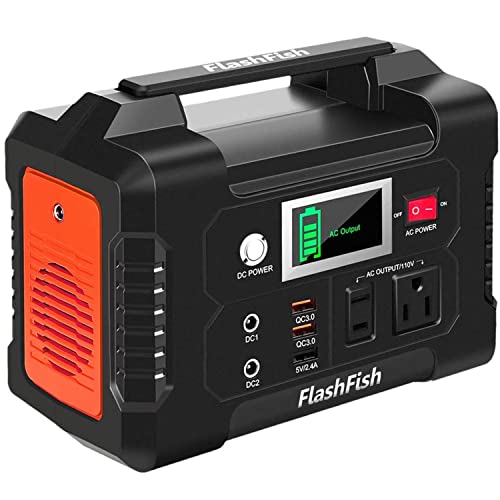
Portable Power Station 200W, FF Flashfish 40800mAh Backup Power Bat...
View available specifications and buying considerations.
SmallEnterpriseD may earn a commission from qualifying purchases. This article is based on documented research and product data, not claimed hands-on testing.