
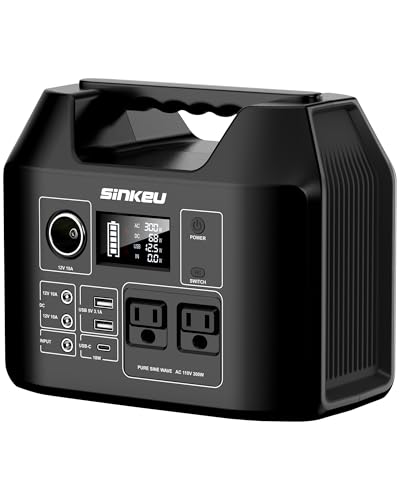
What to know about 300W Portable Power Station 80000mAh LiFePO4 Battery | 256Wh Backup Battery Solar Generator for Hurricane Emergency Outdoor Camping RVs Home
This SinKeu 300W portable power station presents a compact, LiFePO4-based option for short-term backup and outdoor power needs. The unit is specified as 256Wh (listed equivalently as 80,000mAh at 3.2V) with a 300W pure sine wave AC output, eight output/input ports, and a built-in camping light. The listing snapshot supplied here describes recharge options and safety features; use this guidance to decide whether the device’s stated capacity, ports and charging behavior match your planned uses and to identify what to verify before purchase.
Capacity and what 256Wh means for decision-making
The listing gives a 256Wh capacity (also noted as 80,000mAh at 3.2V). That capacity places this unit in the small portable power-station class intended for short-duration runs of low-to-moderate-draw devices. When evaluating whether the capacity is enough for you, match your devices’ steady power draw and expected run time to that 256Wh number. The product copy warns it’s designed to support devices with power consumption under the 300W figure; it also lists common supported devices like phones, laptops, tablets and small appliances. If you need multi-day backup or to run high-draw appliances, the stated 256Wh suggests you should look for larger-capacity options or multiple units.
Power output: 300W pure sine wave and practical limits
The product is described as delivering a 300W pure sine wave AC output. Pure sine output is a real advantage for sensitive electronics (the listing calls out laptops, projectors and cameras). The copy cautions that the unit isn’t suitable for high-capacity products such as electric grills, induction cookers, microwaves or (full-size) refrigerators. The specification to support devices rated below the 300W mark is a clear gating factor: appliances with higher continuous or high-startup (surge) demands fall outside the stated capability, so confirm the actual continuous and surge ratings from the seller if you need to run motors or compressors.
Ports and device compatibility
The snapshot lists eight ports: a DC 19V/3.42A input; two USB-A 5V/3.1A; two DC 5521 outputs; one USB-C PD with listed profiles 5V/3A, 9V/2A, 12V/1.5A; and two AC pure sine wave 120V outlets. That range covers typical phone, tablet and many laptop charging profiles via USB-C/USB-A and DC outputs. The listing explicitly says it supports lamps, fans, mini‑refrigerators and other devices rated under 300W. Before relying on compatibility, verify the connector types and pinouts for any specialty devices (for example, ensure your laptop’s barrel or proprietary plug matches the DC outputs) and confirm that the USB-C PD profile will meet your device’s charging requirements.
Charging options and recharge times
This model is specified to accept three recharge methods: AC wall charger, solar panel, and car outlet. The catalog snapshot gives specific times: AC charging to full in about 3 hours; with a 60–100W solar panel in about 5 hours; and via a 12V car outlet in about 6 hours. These stated times indicate flexibility for on-the-go recharging, including solar-based setups. If you plan to use solar regularly, confirm the exact solar input connector, maximum solar input rating and whether your solar panel requires an adapter. Also note the listing advises recharging the unit every three months if not used frequently.
Safety, chemistry and lifecycle expectations
The listing emphasizes LiFePO4 chemistry and an advanced battery management system (BMS) that monitors voltage, current and temperature. It states the LiFePO4 cells can endure over 3,500 charge–discharge cycles and that the unit includes multiple safety protections. LiFePO4 is commonly chosen for longer cycle life and thermal stability; the snapshot’s claims about an advanced BMS and many safety features point to design priorities around longevity and operational safety. For peace of mind, confirm the presence of specific safety certifications or test reports when making a purchase decision.
Portability, accessories and practical trade-offs
The snapshot lists a unit weight of 6.5 lbs and includes an AC charger, a car charging cable and a user manual. That weight and kit make the unit easy to carry for day trips, camping and short RV stints, and the built-in camping light adds convenience for outdoor use. The trade-off is capacity versus portability: the relatively compact, lightweight form aligns with short-duration use, not extended whole-home backup. If you need longer runtimes or higher output, you’ll need a larger station or multiple units; if you prioritize light carry weight and basic device charging, this model’s specifications align well.
Who should consider it?
This SinKeu unit is best for campers, weekend RVers, outdoor photographers, and anyone seeking a compact emergency backup for phones, laptops, lamps and other small devices. Its stated 256Wh capacity, 300W pure sine AC output and multiple USB/DC ports make it suitable for short-duration power needs and portability-focused scenarios where weight and packability matter more than long runtimes or high continuous power.
Before you buy
Verify the continuous and surge AC ratings and any stated peak output specification before assuming compatibility with motor-driven or compressor appliances. Confirm the exact solar input connector and maximum solar input if you plan to use panels regularly. Check for independent safety certifications and the seller’s support/warranty terms since the provided snapshot is a catalog listing and may not reflect current or complete documentation. Also match your device connectors to the listed DC/USB output types.
Reasons to consider
- 300W pure sine wave AC output, which the listing presents as suitable for many sensitive electronics.
- 256Wh capacity (listed equivalently as 80,000mAh at 3.2V) — a clear published energy figure to use when planning runtimes.
- LiFePO4 battery chemistry with an advanced BMS and a claimed lifecycle of over 3,500 charge–discharge cycles.
- Multiple recharging paths with listed times: AC charger (≈3 hours), 60–100W solar panel (≈5 hours), and 12V car outlet (≈6 hours).
- Eight ports including USB-A, USB-C PD, DC outputs and two AC outlets — broad port set for phones, laptops and many small devices.
- Lightweight and portable (listed at 6.5 lbs) and includes an AC charger, car charging cable and a user manual; built-in camping light adds convenience.
Limitations and unknowns
- Not suitable for high-capacity appliances: listing explicitly warns against electric grills, induction cookers, microwaves and (full-size) refrigerators.
- Unknown: the listing snapshot does not provide the unit’s surge (peak) wattage or the exact continuous vs. peak AC rating — important for devices with startup surge.
- Unknown: independent safety certifications (for example UL/ETL) are not stated in the supplied listing snapshot and should be confirmed with the seller.
- Unknown: exact solar input connector type and maximum allowed solar input voltage/current are not fully detailed in the snapshot and must be verified for solar setups.
Our bottom line
The SinKeu 300W power station, as described in the saved catalog snapshot, is a compact, portable LiFePO4 unit with a stated 256Wh capacity and a 300W pure sine AC output. It offers a useful set of ports, multiple recharge methods with stated times, and claims a long cycle life via LiFePO4 chemistry and an advanced BMS. These specs make it a sensible pick for short-term outdoor use and basic emergency backup for low-to-moderate-draw devices. Before buying, confirm surge ratings, certifications and solar-input details against your device needs and any updated product documentation.
Common questions
How long does it take to recharge this power station?
The supplied listing states three recharge times: about 3 hours from the included AC charger; about 5 hours from a 60–100W solar panel; and about 6 hours from a 12V car outlet. The snapshot also recommends recharging the battery at least every three months if it isn’t used frequently.
Can I run a refrigerator or a microwave with this unit?
The listing specifically advises that the unit may not be suitable for high-capacity appliances such as electric grills, induction cookers, microwaves and refrigerators. The product is described as supporting devices rated under the 300W figure, so full-size refrigerators and other high-draw appliances are outside the stated intended use.
What outputs and ports are included?
The snapshot lists eight ports: 1 DC 19V/3.42A input, 2 USB-A 5V/3.1A, 2 DC 5521 outputs, 1 USB-C PD with 5V/3A, 9V/2A and 12V/1.5A profiles, and 2 AC pure sine wave 120V outlets. Review your device connector types to ensure compatibility.
Is the battery chemistry safe and long‑lasting?
According to the listing, the battery uses LiFePO4 chemistry and includes an advanced BMS that monitors voltage, current and temperature. The snapshot claims the cells can endure over 3,500 charge–discharge cycles and that the unit has multiple safety features. Verify any independent testing or certifications with the seller for additional assurance.
What comes in the box?
The catalog snapshot states the package includes one SinKeu 300W power station, one AC charger, one car charging cable and one user manual. For any additional accessories (for example, a solar-panel cable or adapters), confirm what is provided before purchase.
Why this product may suit your needs
Portable, stated mid-size capacity and practical form factor
The product lists a 256Wh capacity and a 300W pure sine AC output while noting an overall weight of about 6.5 lbs and an integrated camping light. Those elements together make the unit clearly positioned for portable outdoor use and short-term backup rather than long-duration whole-home power.
Design focused on safety and long cycle life
The snapshot calls out LiFePO4 chemistry along with an advanced BMS that monitors voltage, current and temperature, and it states the cells can endure over 3,500 charge–discharge cycles—facts that point to a design emphasis on longevity and thermal stability.
Multiple recharge options with published charge times
The listing details three recharge paths—AC, solar and car—and gives specific approximate times (AC about 3 hours, 60–100W solar about 5 hours, and car outlet about 6 hours), indicating flexibility for field charging and quick top-ups when mains power is available.
Editorial guidance is based on the product information available to SmallEnterpriseD. Confirm specifications, compatibility, price and availability with the retailer before purchasing.


