
A weather radio is a focused tool: its primary job is to keep you informed of severe-weather warnings and provide dependable communications and basic power or lighting when other systems are down. Choosing the right model means matching the device’s reception, power options, user interface and emergency features to how and where you expect to use it—at home, in a car, on camping trips, or as part of a household preparedness kit. The verified product descriptions in our dataset highlight how manufacturers deliver those capabilities with different trade-offs: some prioritize large rechargeable battery packs and multi-mode charging, others emphasize long-lived removable batteries or compact portability with simple analog tuning. This guide explains the practical criteria to compare, what the typical extra features actually do for you, and which things to confirm on a spec sheet and in the manual before you buy.
Key takeaways
- Prioritize reliable NOAA reception and automatic alert scanning if you need early severe-weather warnings.
- Pick the power approach that fits your storage and use habits: replaceable batteries for long-term storage, or rechargeable/solar/crank systems for repeated outage use.
- Check the radio’s user interface and form factor for your likely scenarios—large knobs and non-slip grips are easier to operate in low light or stress.
- Evaluate extra tools (flashlight, reading lamp, SOS alarm, USB charging) for real-world usefulness rather than feature counts alone.
Why a Dedicated Weather Radio Still Matters
A dedicated weather radio receives official broadcasts from NOAA and local stations and can be configured to issue warnings even when other systems (cellular networks, internet) fail. Several entries in the verified product information explicitly describe scanning or receiving NOAA channels and delivering alerts; that is the core benefit you buy a weather radio to secure. For anyone living in a region with tornadoes, hurricanes, flash floods, severe thunderstorms or other hazards, a dedicated receiver maintains a direct line to official, local emergency information.
Beyond alerts, these devices are often designed with outage conditions in mind: they combine lighting, attention-getting alarms, and a range of power options so they remain operational when grid power and phones are unavailable. When choosing a unit, focus first on whether the model supports the NOAA alerting behavior you need—examples in the dataset include radios that scan all official NOAA channels and devices with dedicated WB (weather band) reception—then layer in secondary features based on how you intend to use the radio.
Reception and Tuning: Analog, DSP and Digital Options
Reception quality determines whether you actually hear the alert when it matters. Several product descriptions cite high-sensitivity signal chips, DSP chips, extended or telescopic antennas and digital tuning as ways manufacturers improve reception and selectivity. DSP and upgraded signal circuitry are specifically mentioned as enhancements that reduce static and help lock onto NOAA and broadcast signals, while telescopic or extended antennas are recurring physical solutions for stronger reception.
When comparing radios, note whether the model uses digital tuning or an analog dial. Digital tuning can make it easier to lock on to a station and recall a frequency, which is useful during fast-moving situations. Analog knobs and simple tuning scales are still common and can be intuitive, but may require more careful adjustment to avoid drift. The product set includes both approaches: some radios advertise 'precise digital tuning' while others emphasize large tactile knobs and simple controls for intuitive use.
Power Options: Batteries, Rechargeables, Solar and Crank
Power strategy is a decisive choice. Some radios use removable standard cells (examples include models powered by AA or D batteries), which can be kept in storage separately and installed only when needed—this is useful if you plan to store the radio in an emergency kit for years. Other radios feature built-in rechargeable batteries and one or more alternative charging modes: USB/AC charging, solar panels and hand cranks are all present in the verified product descriptions. These multi-mode systems are aimed at repeated use during extended outages or on trips away from mains power.
Specific product listings highlight different trade-offs. Built-in rechargeable units in the dataset may advertise the ability to recharge phones in emergencies or provide extended standby for alerts; some models explicitly combine a hand crank with an upgraded internal generator or an expanded solar panel. If you prefer maintenance-free readiness with replaceable cells, choose a model that supports that battery format. If you expect to rely on the device as a small power bank or want renewable charging, prioritize models with the combination of solar, crank and USB recharging that fits your routine.
Emergency Lighting, SOS and Attention Features
A weather radio often doubles as an emergency lighting device. Verified product features show a range of implementations: dedicated flashlights with focused beams, flip-up reading lamps for low-level illumination, multi-LED reading modules, and display backlights. Consider whether you want a strong directional flashlight for navigation or a softer reading lamp for hands-free tasks; some listings include both types on the same unit.
Attention features like SOS sirens and flashing alert lights are common and vary in intensity. The dataset includes an example specifying a loud SOS siren and a flashing alert light intended to attract help during roadside emergencies or outdoor survival situations. If you live alone, travel frequently, or spend time in remote areas, an audibly and visually assertive alarm can be a critical capability—confirm the siren and light modes, how they’re activated, and whether they can run simultaneously with radio reception.
Ergonomics, Portability and User Interface
Usability during stress and low light is often overlooked. The verified descriptions repeatedly mention large tuning knobs, non-slip grips, wrist straps, and portable handles. These are practical details: an easy-to-grip shape and clear controls make it simpler to tune to the correct band or turn on the lamp while you’re under pressure. If elderly family members or children will use the radio, look for clear labels, tactile controls and a straightforward power-selection workflow.
Portability requirements vary by intended use. Compact transistor-style radios with wrist straps are convenient for running, walking or day hikes, while slightly larger units with multiple power options and more robust batteries suit household emergency kits. Also check whether the radio includes standard external interfaces such as a headphone jack or USB output if you plan to use the device for private listening or to charge other devices during an outage.
What to Verify on the Spec Sheet and in the Manual
Before buying, confirm the radio’s NOAA capability (does it receive the weather band and does it scan the official NOAA channels?), the power modes supported (removeable batteries, built-in rechargeable, solar, hand crank, AC/USB) and any claims about phone-recharging or standby duration if those features matter to you. The product information in our dataset explicitly shows a variety of answers to these questions—from models intended for simple battery backup through to multi-mode solar/crank/rechargeable devices—so pick the spec set that matches how you’ll use the radio.
Also look for details on antenna length/type, whether tuning is digital or analog, the presence of additional safety features (SOS alarm, flashing light) and ergonomics (grip, knobs, strap). Manufacturers sometimes include operational notes—such as checking the battery level upon receiving the unit—so review the manual for storage guidance and first-use instructions. If you plan to store the radio for emergency readiness, know whether the manufacturer recommends keeping batteries separate and what maintenance is required for built-in batteries or solar panels.
What to check before choosing
- Does the radio receive NOAA weather channels and support auto-scanning of those channels?
- Which power modes are available: removable batteries, built-in rechargeable, solar panel, hand crank, AC or USB?
- What type of tuning does the radio use (digital vs analog), and does it list DSP or high-sensitivity reception features?
- Does the unit include useful emergency extras you’ll actually use (flashlight vs reading lamp, SOS alarm, display/backlight, USB charging)?
- Is the control layout and physical design comfortable for the intended user (large knobs, non-slip grip, wrist strap or handle)?
Final considerations
A weather radio is not a one-size-fits-all purchase. The right choice depends on whether you prioritize long-term storage readiness, portable convenience, or ongoing utility during extended outages. Verified product descriptions in this dataset illustrate the range of approaches: basic transistor-style radios with replaceable batteries and telescopic antennas; multi-mode emergency radios that combine rechargeable batteries, solar panels and hand cranks; and units that add louder sirens, reading lamps and USB power output. Focus on reception quality and the radio’s NOAA alert behavior first, then match power capabilities and physical ergonomics to your realistic use cases. Finally, read the manual and spec sheet to confirm maintenance needs and charging behavior so the radio is ready when you need it most.
Frequently asked questions
Do all weather radios provide automatic NOAA alerts?
Not all models behave the same. Some radios explicitly scan all official NOAA channels and will issue automated hazardous-weather warnings, while others provide weather-band reception but may not auto-scan or auto-notify. Verify the product description or manual for explicit statements about NOAA channel scanning and automatic alerting before you buy.
Which power method is best for long-term storage?
If you plan to store a radio for years in a preparedness kit, a model that accepts removable standard batteries (AA, D, etc.) lets you keep fresh batteries separate and install them when needed. Several items in the dataset call out replaceable battery operation for this reason. Built-in rechargeable batteries are convenient for regular use but require periodic charging or maintenance to stay ready.
Are solar panels and hand cranks reliable backup options?
Solar panels and hand cranks provide alternative recharging paths when mains power is unavailable and are explicitly offered on multiple radios in the dataset. Their practical effectiveness depends on panel size, crank design and how you plan to use the device. When evaluating a model, confirm whether the manufacturer describes the solar-panel area or the crank mechanism and read the manual for recommended charging techniques and limitations.
How important are additional features like SOS sirens and reading lamps?
It depends on your needs. SOS sirens and flashing lights can help attract attention during roadside or outdoor emergencies, and some radios in the dataset advertise a loud siren and a flashing alert light. Reading lamps and multi-level LEDs are useful for low-light tasks in shelter settings. Consider which extras would actually help you during an emergency rather than choosing a unit based solely on a long list of features.
If a radio claims to recharge phones in an emergency, how should I interpret that?
Some product descriptions include phone-recharging capabilities and even give approximate recharge ranges for certain phones. If phone charging is important, confirm the radio’s charging interface (USB Type), whether it is intended as an emergency top-up rather than a full replacement for a power bank, and any manufacturer guidance on how many charge cycles or what conditions to expect.
Explore relevant products
Review available source details and compare products that relate to this guide.

Mesqool Emergency Weather Radio NOAA Alert with Battery Backup 1200...
View available specifications and buying considerations.

Greadio NOAA Weather Radio, AM FM Transistor Battery Operated Radio...
View available specifications and buying considerations.
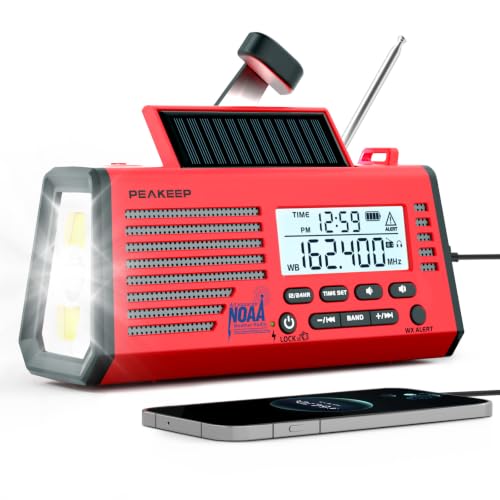
Peakeep Emergency Radio NOAA Weather Alert Battery Solar Crank Powe...
View available specifications and buying considerations.

Peakeep NOAA Emergency Weather Radio Alert with Crank Solar Battery...
View available specifications and buying considerations.
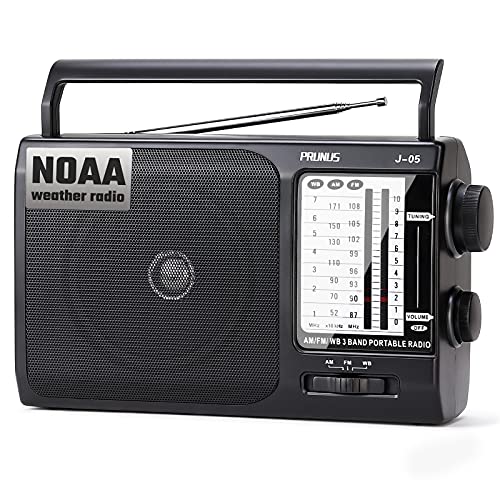
NOAA Weather AM FM Portable Radio, 3 D Batteries or AC Adapter Powe...
View available specifications and buying considerations.

FosPower NOAA Emergency Weather Radio A1 7400mWh Solar Hand Crank (...
View available specifications and buying considerations.
SmallEnterpriseD may earn a commission from qualifying purchases. This article is based on documented research and product data, not claimed hands-on testing.